Skip to content
POS Systems

MartPOS

Kiryana & general store POS

MartPOS

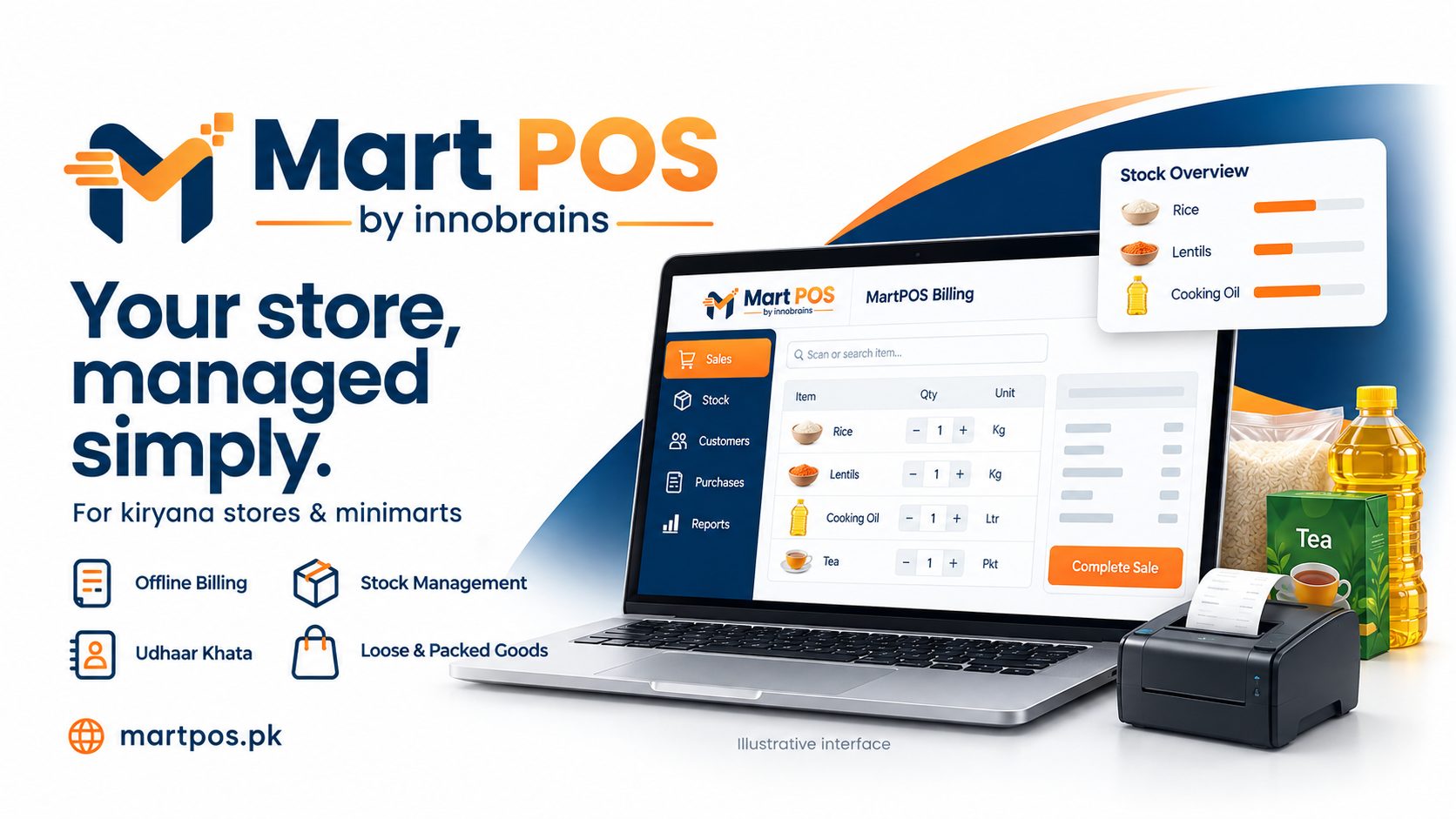
MartPOS is Windows point-of-sale and stock software for everyday retail in Pakistan — kiryana shops, general stores, grocery shops and mini marts. It runs on the shop's own PC and keeps billing when the internet does not.

A kiryana counter is harder than it looks, because half of what it sells has no barcode. MartPOS keeps loose stock in kilos or litres to three decimal places and sells it either way round: by weight, or by money. Press F6, type Rs 50, and at Rs 160 a kilo it bills 0.313 kg for Rs 50.08. Quick buttons cover 100 g, 250 g, 500 g and 1 kg. Packs and cartons sit on the same item with their own sizes, prices and barcodes, so a carton scans as a carton and the base unit still adds up.

Retail and wholesale prices live side by side, dated, with history kept, so changing a price never rewrites an old bill. A counter can be set to either, customer groups can carry their own price list or a discount off a brand, and quantity breaks drop the rate from a set quantity. One source sets each price and nothing stacks — and selling below cost needs a manager, except in a clearance promotion you approved.

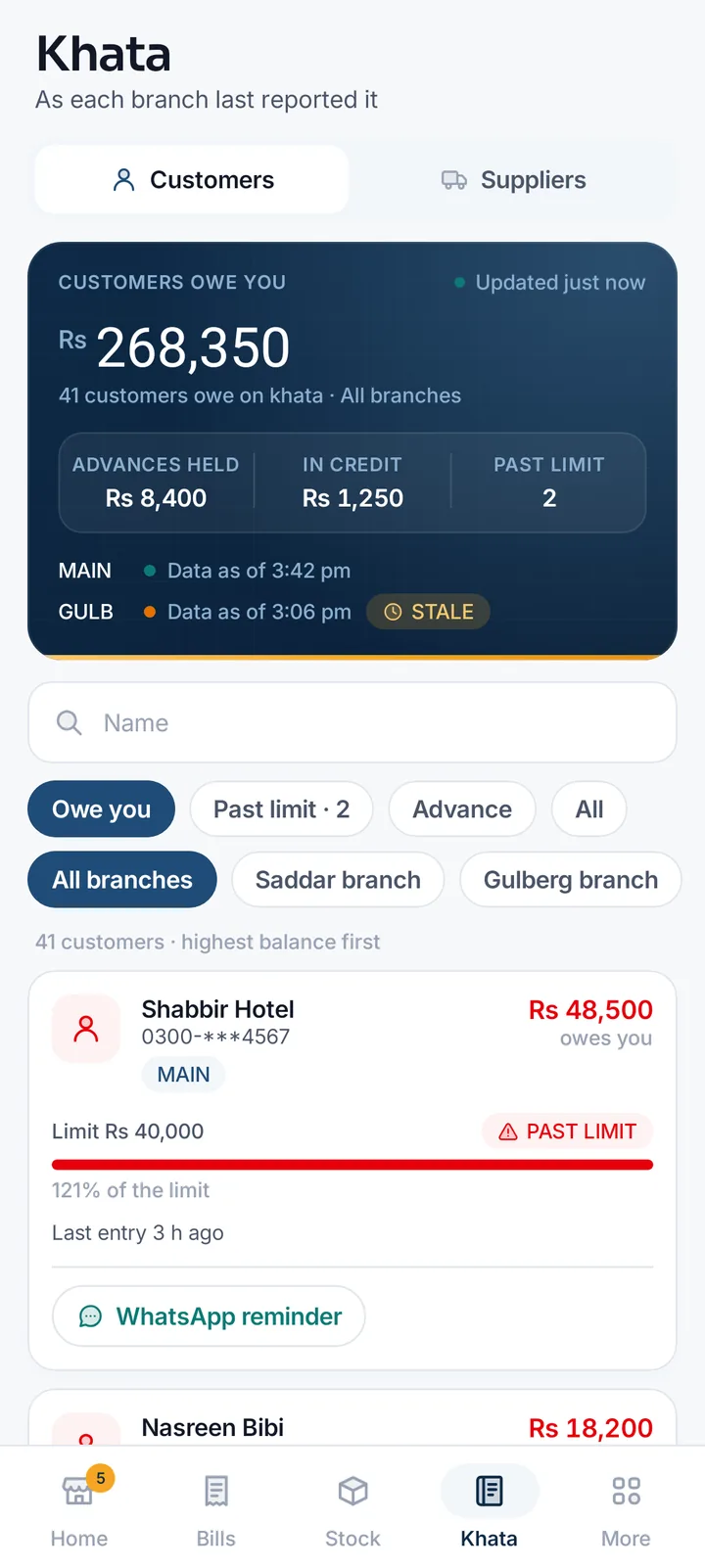
Udhaar is handled as a real ledger rather than a note: credit limits, statements, and payments taken in cash through the drawer, by bank, card or wallet. A bill over the limit is refused or needs a manager's PIN, and one that has gone unpaid too long warns before it is added to. A customer's advance is held for them and used on later bills — never counted as a sale or as extra cash until the goods go out.

On the buying side it keeps the figures honest. Landed cost spreads freight and loading across the items by value or by quantity, and a freight bill that arrives after the purchase was posted is still added to it. Purchase orders are received in parts and never beyond what is owed, supplier returns become a claim at the net price last paid, and expiry dates can be tracked per item with stock held in lots and sold earliest-date-first.

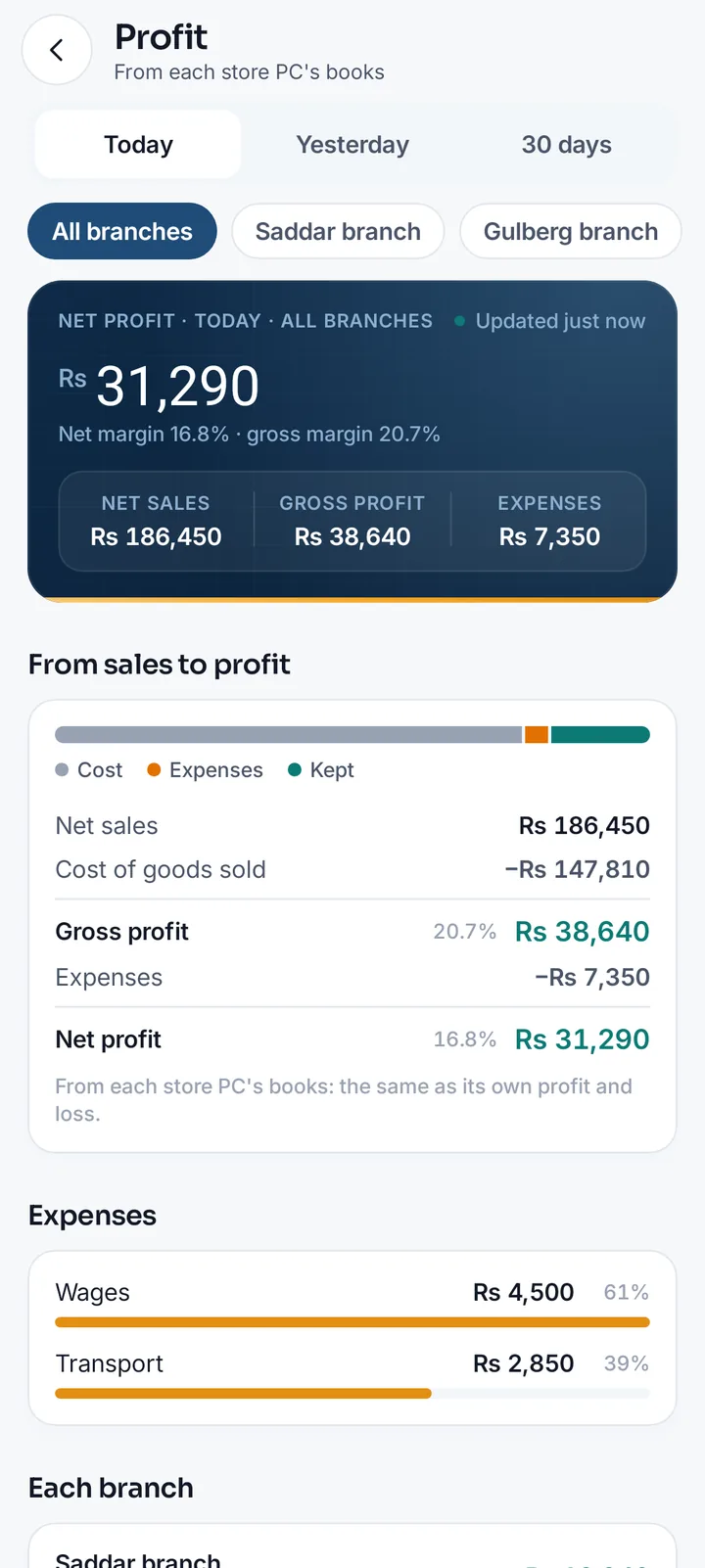
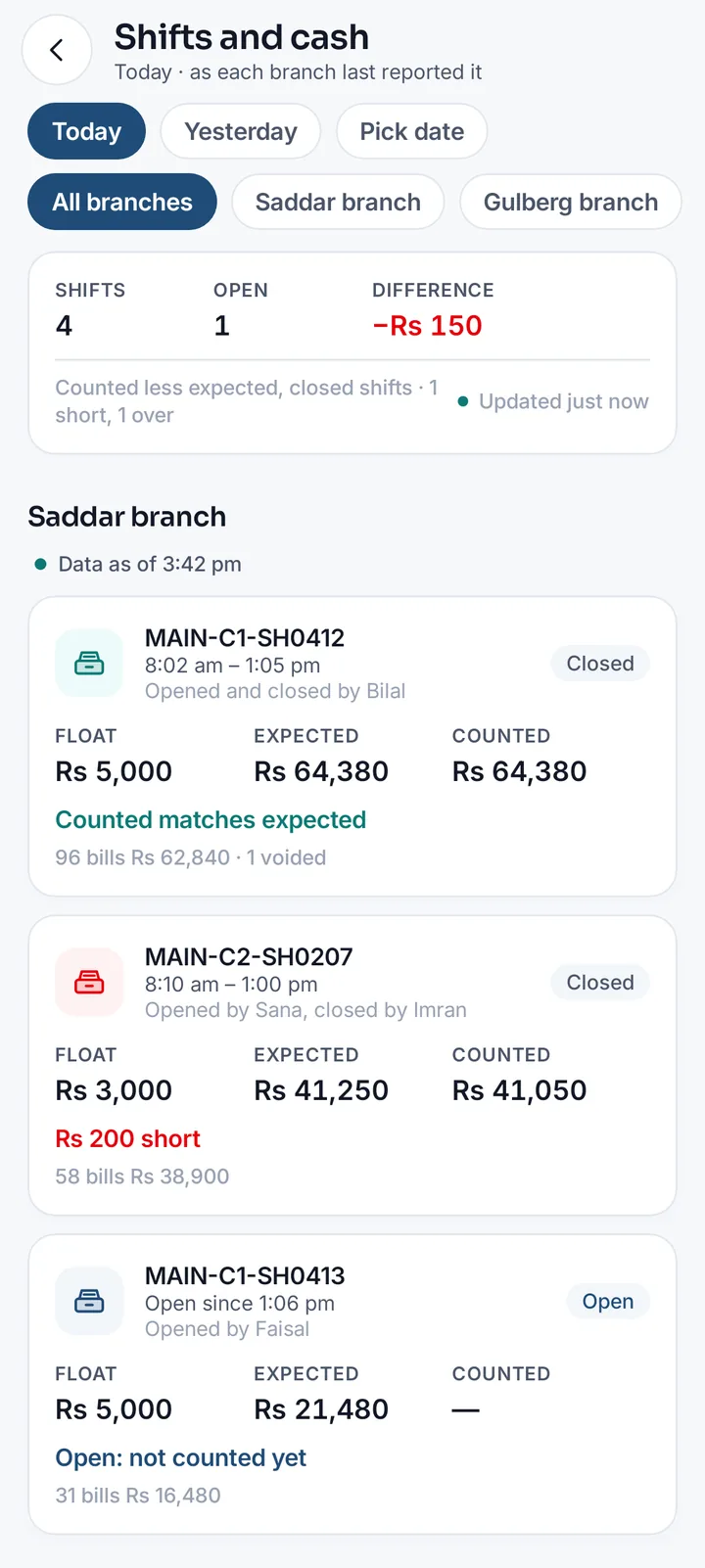
Behind the counter it keeps real books, not a sales total: every posting is a balanced journal entry, with a day book (roznamcha), trial balance, cash book, and a daily sales report carrying gross profit. Shifts close on a blind count — you enter the notes and coins first and the expected figure appears afterwards — and the owner can close the books through a date.

Receipts print on 58 or 80 mm thermal with your logo, in English, Urdu or both, with Urdu sent as a picture so the printer needs no Urdu font. A4 invoices, statements and the main reports print in either language, with Urdu pages laid out right to left.

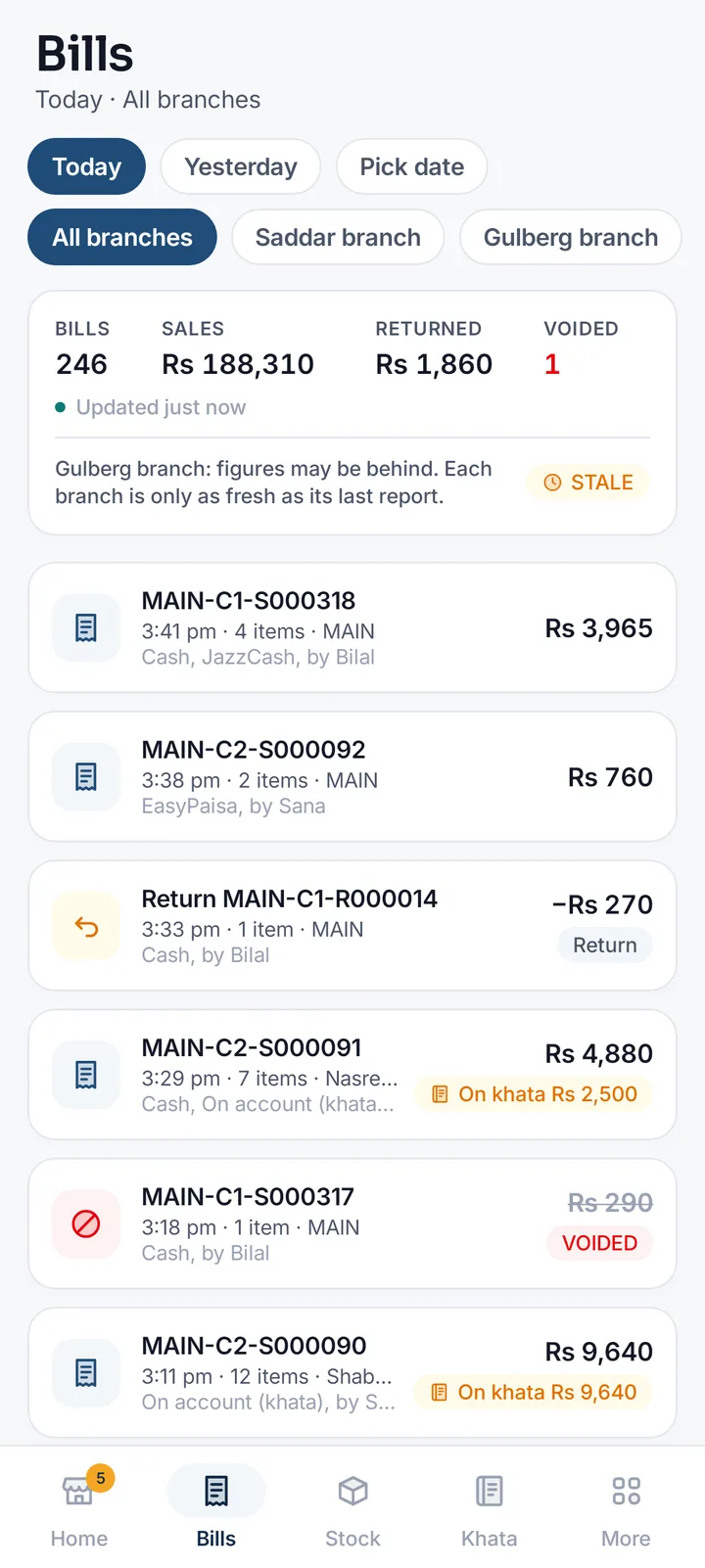
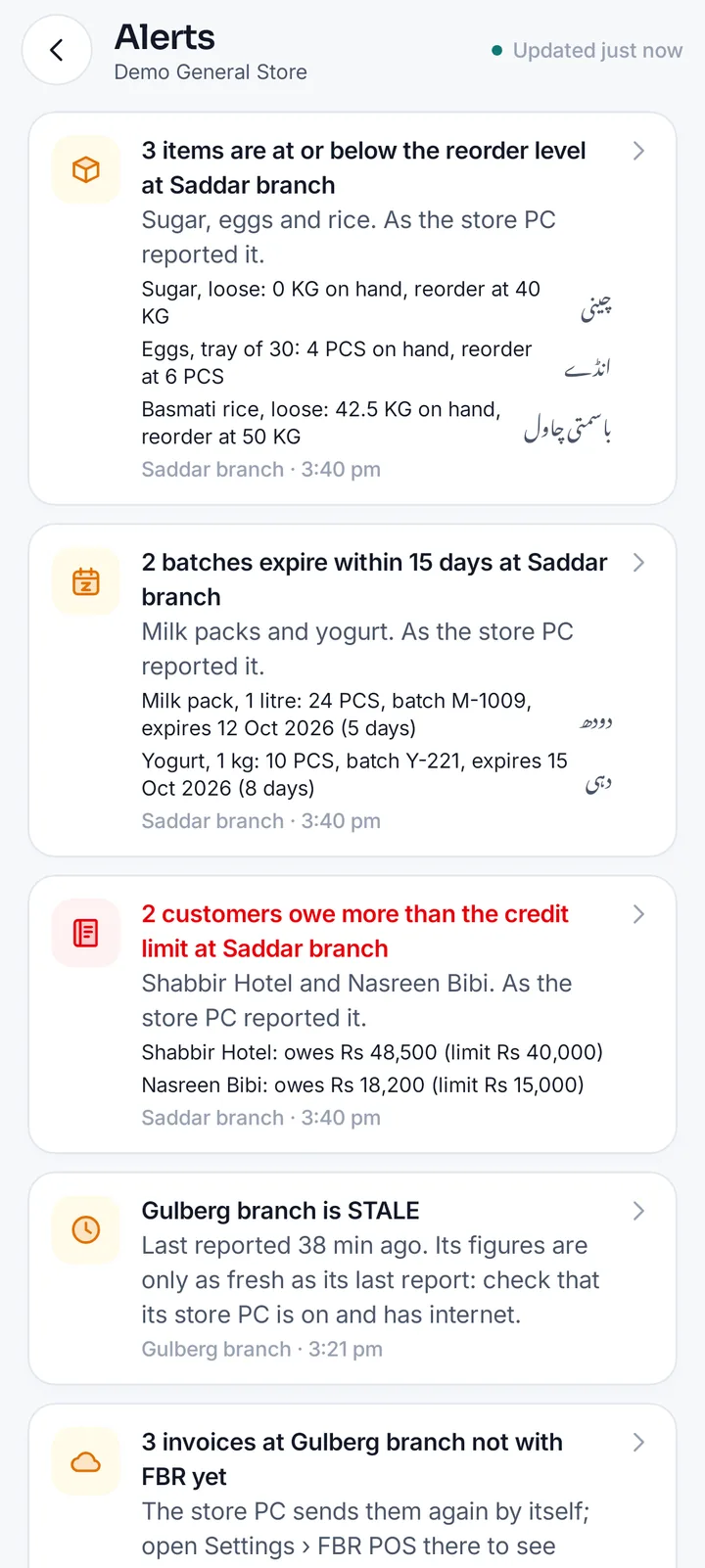
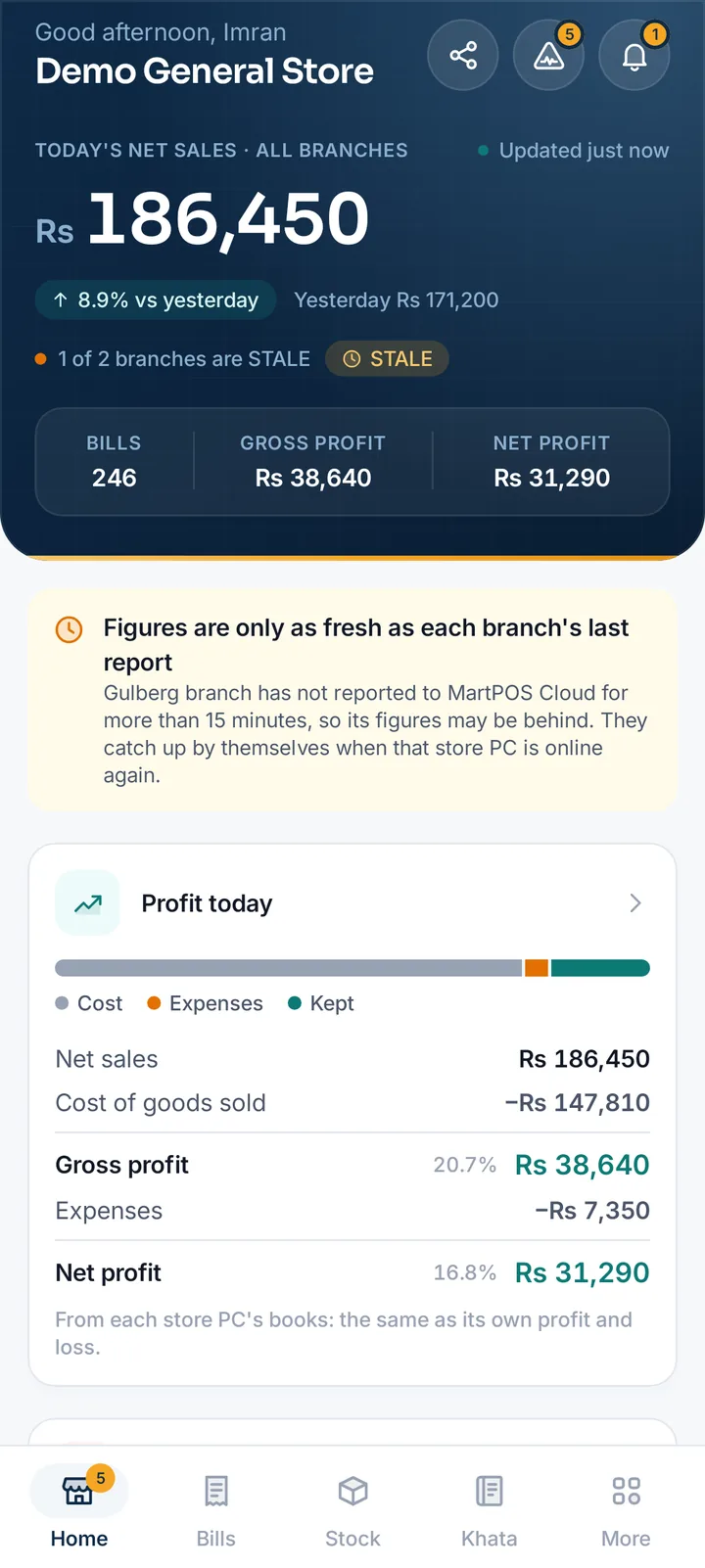
It comes in two shapes. A Desktop licence is a one-time purchase for a shop whose data stays on its own PC. A Cloud plan adds automatic sync, encrypted backups kept for 30 days of recovery points, an owner portal in any browser, and up to three branches with transfers between them. The portal shows each branch's sales with the time it last reported, and marks a branch STALE after fifteen minutes' silence rather than showing it as a quiet day — because it may be selling right now with no internet.

For Tier-1 retailers, FBR POS integration reports each sale as it is billed and prints the FBR invoice number, QR code, NTN, STRN and POS ID on the receipt. Returns go as credit notes against the original invoice, and bills made while FBR is unreachable are sent automatically when it returns. It stays switched off, with no FBR fields and no fee, until you turn it on.
What it does

  • Keyboard-first till — scan, or search by name, brand, code or Urdu name
  • Loose goods by weight or by rupees (F6): Rs 50 at Rs 160/kg bills 0.313 kg
  • Loose stock in kilos or litres to three decimals; quick 100 g / 250 g / 500 g / 1 kg
  • Packs and cartons on one item, each with its own size, price and barcode
  • Retail and wholesale prices side by side, dated, with history kept
  • Price lists per customer group, quantity breaks and dated promotions
  • Below-cost selling needs a manager's approval
  • Udhaar khata with credit limits, statements and over-limit rules
  • Customer advances held for them, never counted as a sale
  • Landed cost: freight and loading spread across the items
  • Purchase orders received in parts; supplier returns as claims
  • Expiry dates per item, stock in lots, earliest date sold first
  • Day book (roznamcha), trial balance, cash book and gross profit
  • Blind cash count at shift close, with the Z report
  • Services like delivery or a carry bag, billed with no stock and no cost
  • Check digits verified on EAN-13, UPC-A and EAN-8; in-store barcodes too
  • Receipts and reports in English, Urdu or both, Urdu printed as a picture
  • FBR POS integration with invoice number and QR on the receipt
  • Owner portal in any browser; a silent branch shows as STALE
  • Works offline; the store PC owns the records and syncs when it can

More products

POS Systems From Rs. 23,750

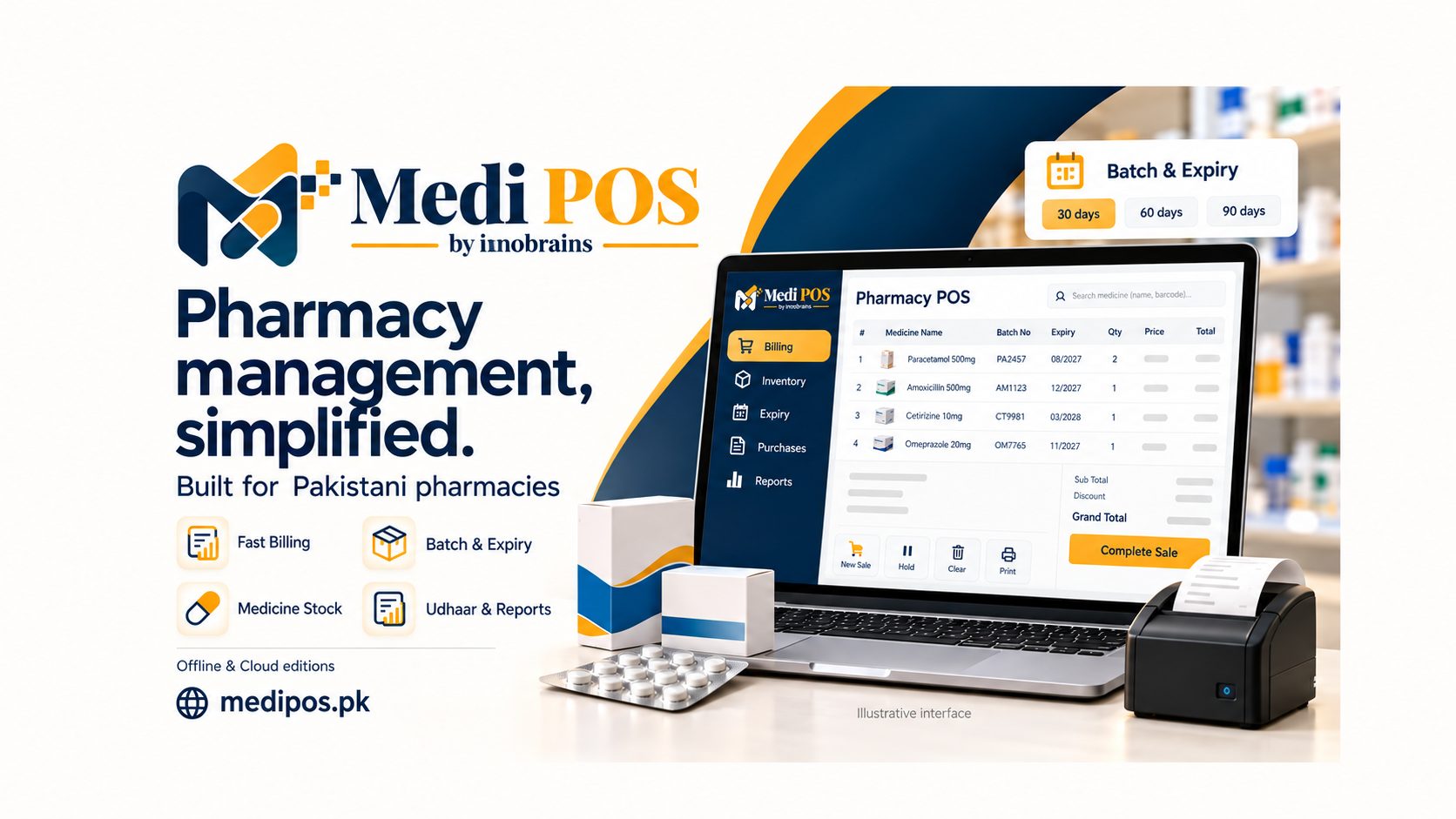
MediPOS

Pharmacy POS — offline or cloud

Pharmacy billing, stock and accounts for Pakistan: a cloud edition billed yearly or monthly, or a one-time lifetime licence that runs offline on your own shop computers.

PHP Laravel 13 PostgreSQL Blade
POS Systems Rs. 30,000

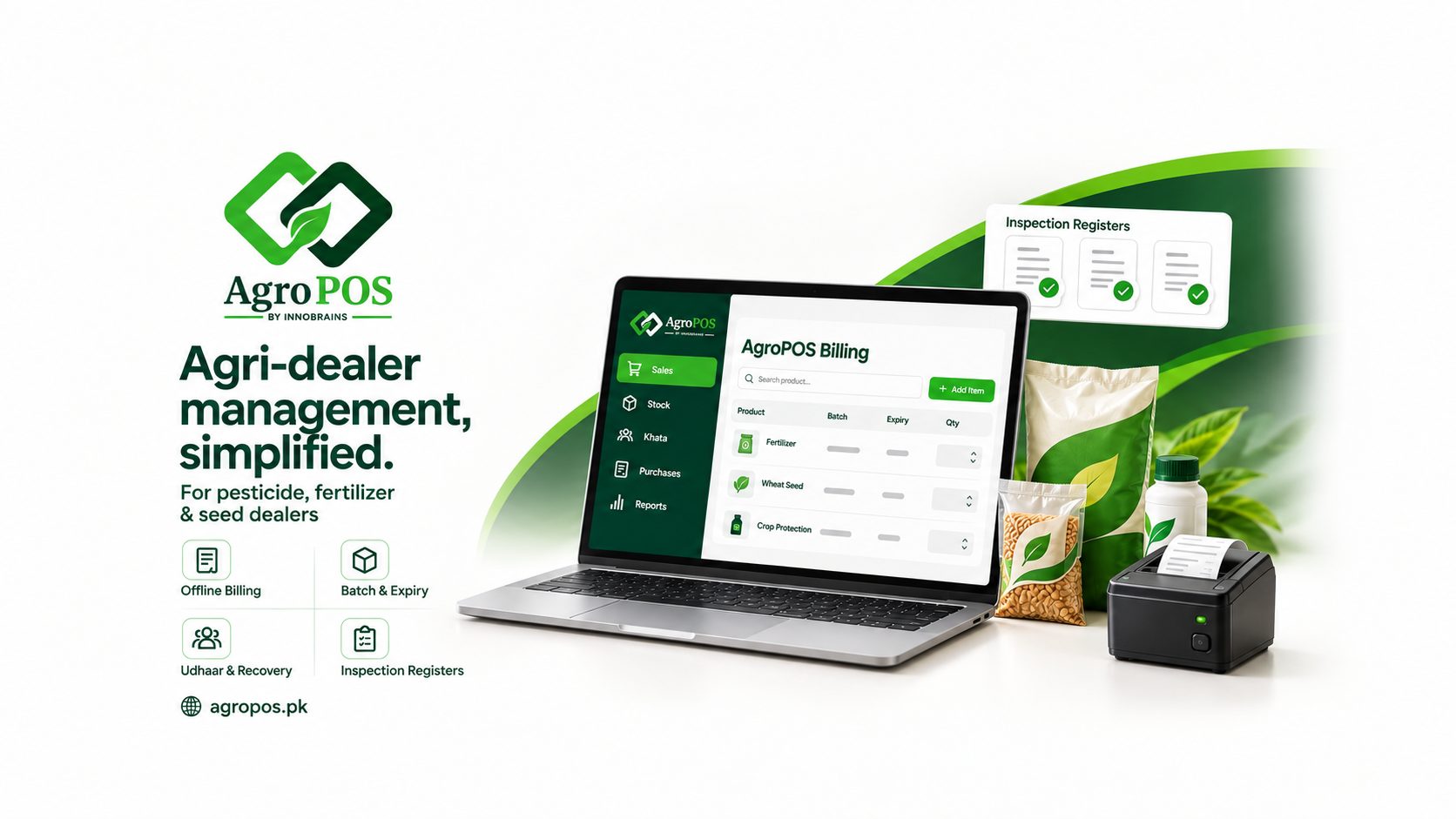
AgroPOS

Agriculture POS Software

Windows POS and inventory software for pesticide, fertiliser and seed dealers in Pakistan — batch-wise expiry tracking, farmer udhaar khata, Agriculture Department inspection registers and fully offline billing.

Dart Flutter SQLite Kotlin
POS Systems From Rs 17,500/year

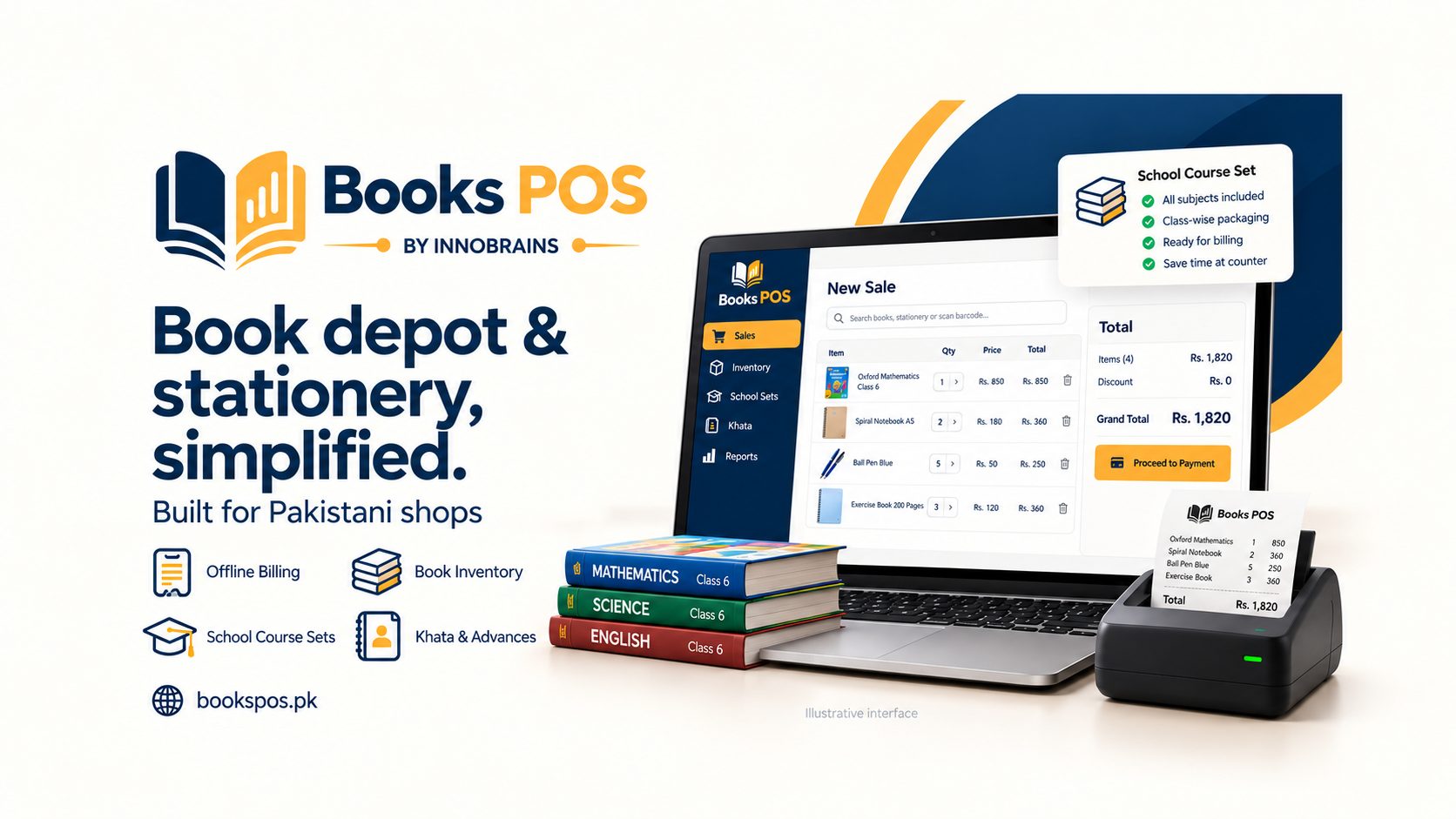
BooksPOS

Book depot & stationery POS

Point of sale for book depots, stationers and school uniform shops: books by edition, stationery by the box, uniforms by size, and school course sets at the till.

C# .NET 10 WPF SQLite
FAQ

Questions about MartPOS

Two ways to buy. A Desktop licence is one-time: Rs 29,900 for Shop (1 branch, 2 counters, 5 staff) or Rs 39,900 for Business (4 counters, 10 staff), each with support and updates for the first 12 months, and Shop can be paid as Rs 15,000 then Rs 14,900. A Cloud plan is billed yearly or monthly and adds sync, hosted backups and the owner portal: Rs 19,900 a year (Rs 1,990 a month) for Shop, Rs 34,900 for Business, and Rs 59,900 for Chain with up to three branches. Add-ons where you need them: an extra counter or a 5-login staff pack at Rs 19,999 each, Cloud Backup Only at Rs 4,990 a year per branch, and Care renewal at Rs 5,500 a year. Every plan starts with a 14-day free trial, no card needed.

Both, and the second is the one shopkeepers ask for. Press F6, type the amount a customer wants to spend, and MartPOS works out the weight: Rs 50 at Rs 160 a kilo bills 0.313 kg for Rs 50.08. Loose stock is kept in kilos or litres to three decimal places, so the parts add up over a day rather than drifting, and quick buttons cover 100 g, 250 g, 500 g and 1 kg.

Yes. The shop's own Windows PC runs the store server and owns that branch's records, so selling, returns, purchases, khata payments, closing a shift and printing all carry on with no connection. On a Cloud plan the changes wait in order on the store PC and go up each exactly once when the line returns. One thing worth knowing: a till on a second PC needs the shop network to reach the store PC, though the till on the store PC itself keeps working regardless.

Yes. Both rate cards sit on the item, dated, with history kept, so changing a price never rewrites an old bill. A counter can be set to retail or wholesale, a customer group can carry its own price list or a discount off a brand or category, and quantity breaks drop the rate from a set quantity. One source sets each price and nothing stacks, so you can always see where a price came from.

As a ledger, not a note. Each customer carries a credit limit, a running balance and a statement, and payments come in through the drawer as cash or by bank, card or wallet. A bill that would cross the limit is refused or needs a manager's PIN, and one left unpaid too long warns before more is added. The Khata screen shows the total still to collect. An advance a customer pays ahead is held for them and used on later bills, and is never counted as a sale.

It is what the goods really cost you once freight and loading are counted. MartPOS spreads those charges across the items on the delivery, by value or by quantity, and a freight bill that turns up after the purchase was already posted is still added to it. Without that, gross profit is overstated on every line — which is the usual reason a shop's margin looks better on paper than in the drawer.

Yes, for Tier-1 retailers. Each sale goes to FBR right after it is saved, through their online API or the Fiscal Component, and the receipt carries the FBR invoice number, QR code, your NTN, STRN and POS ID. Returns are reported as credit notes against the original invoice, and bills made while FBR is unreachable are sent automatically when it is back. It stays switched off — no FBR fields, no fee — until you turn it on, so a shop that is not Tier-1 never sees it.

Yes, and without needing an Urdu font on the printer: Urdu is sent as a picture. Thermal receipts are 58 or 80 mm with your logo, and you choose English, Urdu or both for the wording and for item names separately. A4 invoices, statements and the main reports print in either language, with Urdu pages laid out right to left.

On a Cloud plan, yes, through the owner portal in any browser on a laptop or a phone — each branch's sales today and over seven days, stock, khata, paired PCs and the licence. It always shows when a branch last reported and marks one STALE after fifteen minutes' silence rather than showing a quiet day, because it may be selling right then with no internet. There is no phone app yet.

Yes — 14 days from when you set up your first PC, with no card required. Items with their packs, Urdu names and opening stock, plus customers and suppliers with opening balances, import from CSV, and every row is checked before anything is written. The import even resumes after a power cut, so you can try it on your own item list rather than a demo one.

The store PC takes an encrypted backup at a time you choose, after each shift closes and before every database upgrade, and reads it back to check it. You can keep a second copy in another folder or on a USB drive. On a Cloud plan the backups are also kept on MartPOS Cloud, still encrypted with your own backup password, with 30 days of recovery points you can restore onto any PC. A Desktop branch can have that alone as Cloud Backup Only.

Yes. We install it, bring in your item list, customers and opening balances, and train whoever stands at the counter. After that you can reach us on WhatsApp or the phone, from our own team in Jhang, Monday to Saturday. There are also sixty-odd written guides at martpos.pk/docs covering everything from the first install to closing the books.